Tuesday, 5 April 2016

3 Performance Management Trends of 2016

Change is underway


In recent years, companies have been on a mission to explore and implement best, simplest and effective mechanism to create a high performance environment. Process for employee driven feedback has been emphasised if the Millennials are concerned as Millennials are quickly becoming the most influential population in the job market.

Millennials want straight forward feedback. Creating a continuous feedback mechanism for the start up with continuously changing priorities is quite challenging. Having said that, here are the 5 trends which are going to be very critical to manage talent and performance in 2016:

1. Growth:

Having more millennials in the system demands you to think and act like them. They are more critical thinkers and embrace an entrepreneurial mindset. So they look for advanced and challenging opportunities. They would not stick around if you try to stop or bind them. Instead, if they feel you have invested in their growth, they likely to keep strong relationship not only with company but people in it.

Combining it with performance reviews, Millennials want straight forward feedback. So the process which might not include year end ratings but across the board, they tend to focus more on agile goal setting, continuous improvement, regular feedback, coaching and development.

2. Environment:

Creating and sustaining an environment where employees feel supported and valued by leadership is critical to have today. Which means relationships statistics of employee and employer must grow beyond just formal annual work reviews. Having said that all cannot be treated alike as not all are star performers, strong employee - employer relationship is the key as they don't want to work for you, they want to work with you.

The biggest issue with the annual performance review is the emphasis on the overall delivery than on the focus to look on the opportunities to have continuous learning and improvement.

And as HR plays a critical role in rolling out the review forms, rating mechanism, instead have should shift the focus from this outdated model to more towards helping the managers to coach their teams to succeed. This emphasis shift assures the required transformation in the overall performance management approach.

3. Engagement and Alignment:

Bringing right talent, right strategies, practices and goals altogether assures the organisation's success. Irrespective the industry, the success of the organisation rely on the agility it has in terms of the defined processes, practices, strategies and goals along with ensuring the agility while growing fast.

Here comes the question. How the people in the organisation are aligned with all those processes, practices, strategies and goals? When people understand the goals and directions their company is taking, they are more inclined towards achieving their goals.

Now there are two parts of this arrangement. First part, we need people, people to contribute some sets of goals, goals which are critical to organisation's success. And the success which acknowledges the hard work of the people. Now these employees are also expected to understand as to how their individual contribution in form of their job responsibilities is going to contribute towards the success of overall organisation's goal accomplishments.

And the second part which is largely ignored. Let's talk about the team, department and organisation dynamics in terms of goal alignment. An individual must be given the transparency of team goal, the impact it is going to have on department's goal and the overall organisation's goal. 

But that doesn't mean that you create a wall of goals for them to be confined and perform as they would not like to be confined and limited. They like flexibility as much as they do like the directions. The aspirations give them motivation whereas their daily work lives may become cynical which may result into poor performance.

Saturday, 21 November 2015

Trust at Work


Trust is most crucial factor of human psychology and even more crucial at work. 


The most fragile emotion of human psychology is Trust. There is a saying.. Trust is difficult to establish, hard to maintain and easy to break. So essentially the most fundamental ingredient of human relationships. 

Organisations having trust imbibed in their culture are tend to be more successful, flexible and employee friendly. But who has the responsibility of creating a trust worthy environment and sustaining it? It has to be a top-down approach where the responsibility lies with Top Management to instill a trust worthy environment by setting up examples for team to follow. 

Workplace transparency and trust is quite complicated. And when it comes to leaders, it is even more complicated. There are two approaches to create a trustworthy environment. Simply Trust or Trust, but verify. Applying "Trust, but verify" can be trust limiting approach top management commonly make. It can be a destructive approach when it comes to saving the relationships. When the outcome is crucial and significant more than relationship, use trust, but verify. This approach is basically used by those who believe "people need to earn trust".

Most of us have a higher than average perception about ourselves, often obstruct our vision to our shortcomings. The same illusory superiority also applies to us when we overestimate our own qualities and abilities. Similarly with Leaders. The better than average illusion is the key reason, they are not interested in building trust at work. The leaders want organisational trust, management trust and the social trust but when it comes to trusting their team, their approach is trust, but verify. And it's not a personal problem. And in today's scenario, where everything is about trust and potential, these leaders are not perceived as trustworthy by those they lead but at the same time they are failing to perceive this as about them. 

When trusting the team, it is the best practice to get the great results. To produce great outcomes, trust is the essential factor. Be it vertically or horizontally, trust enables the ownership. In an organisation with great values, trust is the dominating factor where great ideas, strategic initiatives and culture of innovation are the key factors of building the environment.


Monday, 31 August 2015

Employee Engagement Approach - Conventional or Unconventional?


What do we understand by the term "Employee Engagement"? Does this really work? Does it help in motivating your workforce? Or connecting employees with company's goals? Do really employees give a fig about company's goal?

Well... I think the toughest and most important challenge you face as an entrepreneur, especially now a days is connecting the workforce with your company's goal. People who work for the company build the stakeholder value. A CEO, HR or Finance alone can't do it. It's the collective efforts of the employees build the stakeholder value of a company. But if they are not connected or engaged, they would not be an active part of your company's goal.

Isn't it, employers are more focused on productivity? Yes. And Employee Engagement influence Productivity. People who are being valued, recognised and involved at work are more likely to be engaged and productive in turn. But How to engage them? 

Companies are failing in engaging their employees since they follow a conventional approach. What they forget to do is to consider their work life balance. Do these companies really bother about the life their employees live after their work or what are their personal interests are? The answer is..No. They don't. Look around yourself. The work pressure is all around among the environment. The environment which is demanding and expecting you to be a top performer. In this scenario, why do employees have to be engaged in company's goal, when they have their own goals to achieve? That's where the failure lies for employee engagement.

Companies succeeding  now a days  are following the unconventional approach to engage their employees. They are wanting their employees to master skills which are not only useful to their work. They sponsor for the skills employees are interested in outside their work. A Company which is trying to connect to employees' personal goals, can expect it's people to be connected to it's Goal. 

The simple and easiest way to engage your staff is to look after them. And they will look after everything else. 


Wednesday, 12 August 2015

Ethics at work - Whose responsibility?


What ethics are? How much ethical you are? Do these affect personally or only at work? There is a saying "an honest day's work for an honest day's pay".

There are common ethical dilemmas we face everyday both at work and home. Dealing and handling those dilemmas are difficult but is critical to have an ethical environment. Ethics begin with the sense of social responsibility one has as an individual. Moral values which are inherent in the society help creating a difference between right and wrong. These moral values give an individual potential to lead a team with ethics, with a culture having trust and with a sense of acceptance to right and wrong. Someone once asked me the definition of right. Definition of right is not one drives based on perception and justification. It is driven by Integrity. Integrity to the system you work for and honesty to yourself. An integral system builds a culture of social responsibility.

What can be the situations where ethics are being exploited?

Harassment, misusing IT infrastructure of the company you work for, cheating your employer or not treating your co-workers well. There can be numerous issues. Off the job, an employee may show questionable actions about people or things. Which can be risky to address this. Avoiding such behaviors and not dealing with the root cause may lead to low trust work environment where employees tell lies and manipulate at their convenience.

If bad behaviors are not identified and eliminated, if the root cause are not found and corrected, the culture is going to be impacted. And the culture threat is to those of the Start ups specifically who are in process of setting up their values in place. Similar with employer. Exploiting employees, assigning work in odd hours, not giving the right opportunities, divide and rule an so on. 

It is always assumed that Upper Management and HR hold the responsibility to have an ethical environment. Is that true? And if the Management itself is creating an unethical environment and pretends to create a positive atmosphere, whose job it is to have a right culture in place?

Culture within the organisation is always affected by daily actions and decisions. If these actions and decisions are begun to be overlooked for individual's gain, the whole concept of social responsibility and ethical environment is begun to be defeated. We as an individual are less conscious about the affect our decision is going to make on the other counterparts. But it does.

A company's major contribution to an ethical environment is to focus on the different groups of people both for practical reasons as well as ethical. Employees are the group of people critical for success working for the common purpose. A pool of high potential talent with appropriate skills is one of the greatest strength a company can have. The major responsibility of an employer is to protect the relationship of the organisation to the environment, the nature of reality and truth, the nature of human nature, the nature of human activity and the most important, the nature of human relationships. Letting you people know as to what is the right way to interact and to distribute power and resources. to distribute information.

Organisational ethics always focus on the choices of the individual and the organisation. Its a broad concept that talks about not only the internal trust but also the processes, rules, outcomes and a way of working basically not a set of few principles. It's a continuous effort to create a literal meaning to common purpose and shared set of believe set.

Tuesday, 21 July 2015

Digital Growth of Human Resource


"Humanity is acquiring all the right technology for all the wrong reasons." -R. Buckminster Fuller

The rapid growth of Technology is changing the way people live and work. How Organisations are coping up with this challenge?

From past many years, HR Department has given a great contribution in making a high investments in technology to help in retaining the best talent within the organisation and also to create tools for effective communication. These tools are intern giving a platform to engage and build positive relationships resulting in a higher level of satisfaction and morale. Organisations want to build a culture which is friendly and productive. But how technology, culture and relationships are connected? 

To the extent we use technology is a bit surprising. Using project management tools like Basecamp and chat tool like Skype or Google Hangout make life much easier at work along with maintaining a personal relationship with people at work. But being an employer, have you ever realised or evaluated as if your employee is not taking it along at home after work? OR they  are not affecting their personal relationships for the sake of so called employee engagement? Yes it affects. As an employer you might have issued laptops,  data connections or mobiles to your people. Have you kept a check on the usage. How many times have you? I always have a question back in my mind as to what type of relationship these companies are trying to build? Isn't it the aim is little shallow? 

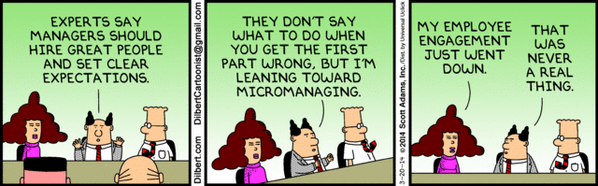
Employees feel bad when it comes to micro-managing but not at the time when they misuse the technology for their personal interest. People have been writing good things to advocate an employee friendly environment and  challenges employees face when they are being micro managed but what they don't understand is that technology misuse is the biggest challenge employers are facing these days. 

I am always of the thinking that Human Resources (people) are the most critical asset a company can have.  I also agree to have an employee friendly culture. And I also know keeping policies in place for everything is something people don't like. But I am still there with my question. What kind of relationships? With company or people? Because there has to be a distinct line between professional and personal relationship too.

A misuse of Internet or any electronic device can harm confidentially aspect of the company. Many companies resist putting IT usage policy in place to be employee friendly and do not want to limit employees. It is important, however, to maintain a balance between being employee friendly with technology and reducing risk to your company. A company should understand the legal implications when it comes to misuse of data since "Facts are venerable to misuse."


Friday, 3 July 2015

Analyse your temper


Analyse your Temper


There was a little boy who had a bad temper. His father gave him A Bag of Nails and told him that every time he lost his temper, he must hammer A Nail into the Fence.

The first day boy had driven 37 nails into the Fence. Over the next few weeks as he learned to control his anger, the number of Nails hammered daily, gradually dwindled down. He discovered it was easier to hold his temper than to drive those Nails into the Fence. Finally the day came when the boy didn’t lose his temper at all.


He told his father about it and the father suggested that the boy now pull out one Nail for each day that he was able to hold his temper.

The days passed and the young boy was finally able to tell his father that all the Nails were gone.

The father took his son by the hand and led him to the Fence. He said “You have done well, My Son, but look at the Holes in the Fence.

The Fence will never be the same. When you say things in Anger, they leave a scar just like this one.”

You can put a knife in a Man and draw it out. It won’t matter how many times you say “I’m Sorry”, the wound is still there.


Make sure you control you’re temper next time you are tempted to say something you will regret later.